Lime mortar is often the quiet safeguard of an Edinburgh sandstone building. When it is sound, it manages moisture, cushions small movements in the masonry and allows the stone to perform as intended. Knowing how to maintain lime mortar means protecting far more than the visible joints: it helps preserve the condition, appearance and long-term value of a period property.
Unlike hard cement mortar, traditional lime mortar is deliberately more permeable and comparatively softer than the surrounding stone. That is not a weakness. It allows moisture within the wall to evaporate through the joints rather than being trapped in the sandstone, where it can contribute to dampness, salt damage, cracking and spalling. Good maintenance is therefore about observing changes early and choosing repairs that remain compatible with the original fabric.
Why lime mortar needs a different approach
Many of Edinburgh’s Victorian and Georgian buildings were constructed with lime-based mortars. Their walls were designed to breathe, particularly where soft or medium-density sandstone is exposed to persistent rain, wind and changing temperatures.
A modern cement-rich pointing mortar can look tidy at first, but it may be too hard and too dense for older stonework. Moisture is then encouraged to escape through the sandstone instead of the joint. Over time, this can leave stone faces deteriorating while the cement pointing remains stubbornly intact. The right principle is simple: the mortar should be sacrificial, taking the weathering before the stone does.
Lime mortar also accommodates slight seasonal movement. Solid masonry walls are not static, and a suitable lime mix can tolerate small shifts without forcing stress into the surrounding stone. This makes careful lime pointing an essential part of a preservation-first approach, rather than a cosmetic finishing task.
Inspect lime mortar twice a year
Most property owners do not need to inspect every joint closely every month. A considered check in spring and autumn, together with an inspection after severe weather, is usually enough to identify developing problems. Look at accessible areas from ground level first, using daylight rather than relying on photographs alone.
Pay particular attention to chimney stacks, parapets, window heads, copes, projecting stone details and lower wall sections. These areas are commonly exposed to heavier water run-off or repeated wetting. North-facing elevations can stay damp for longer, while sheltered locations may conceal gradual joint decay beneath algae or accumulated dirt.
Healthy lime mortar may weather back slightly from the face of the stone. This is normal and is often evidence that the mortar is doing its job. What matters is whether the joint still has sufficient depth and cohesion to keep the masonry properly bedded and weathered.
Signs that maintenance is required
Some surface weathering is expected, but arrange a professional assessment if you see mortar that has become loose, powdery or deeply recessed. Open joints, gaps around individual stones and persistent cracking should not be ignored, particularly if they occur near openings or at the corners of a building.
Damp patches on internal walls, recurring salt deposits, water entering around windows or vegetation growing from joints can also point to failing mortar or a wider moisture issue. The cause is not always the pointing alone. Defective gutters, leaking downpipes, poor flashing and inappropriate previous repairs can all direct excess water into the wall.
A small, isolated loss of mortar may be suitable for localised repair. Widespread failure across an elevation usually calls for more careful repointing, with the extent decided after the masonry and its moisture routes have been assessed.
Keep water away from the wall
The best way to maintain lime mortar is to reduce unnecessary saturation. Edinburgh’s climate makes this particularly relevant: driving rain and repeated freeze-thaw cycles can accelerate deterioration where water is continually discharged onto a wall.
Keep gutters, hoppers and downpipes clear and securely fixed. Check that downpipe shoes discharge correctly into the drainage system rather than soaking the base of the building. Damaged roof coverings, overflowing gutters and cracked flashings should be dealt with promptly, because even the best lime pointing cannot compensate for a constant source of water above it.
At ground level, avoid raising external soil, paving or decorative gravel against the stonework. High ground levels can bridge damp-proof details in later buildings or restrict evaporation in older solid walls. Leave a sensible gap where possible, and make sure air bricks remain unobstructed.
Plants need similar consideration. Climbing vegetation may look attractive on a period façade, but stems and roots can work into decayed joints, retain moisture and obscure defects. Carefully managed planting set away from the wall is usually the safer option.
How to maintain lime mortar without causing damage
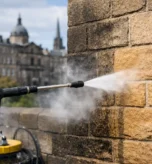
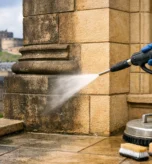
Gentle care is usually better than frequent intervention. Do not pressure wash lime-pointed stonework, as high-pressure water can erode the face of soft mortar, drive water deep into the wall and damage fragile sandstone. Abrasive cleaning, wire brushing and strong acidic cleaners carry similar risks.
If light surface dirt or biological growth needs attention, the correct method depends on the type and condition of the stone, mortar and contamination. A specialist should identify the cause before cleaning begins. Removing algae without addressing a leaking gutter, for example, only treats the symptom.
Avoid patching joints with ready-mixed cement mortar or sealants from a general builders’ merchant. These materials may not match the permeability, strength, texture or colour of the existing mortar. They can also create a visually distracting repair on a prominent sandstone elevation.
Where small repairs are appropriate, loose material should be carefully removed back to sound mortar without widening the joint or damaging the stone edges. The joint is then cleaned, lightly dampened and repointed with a compatible lime mortar. The exact mix, aggregate and finish should be selected to suit the building rather than chosen by colour alone.
Allow new lime mortar to cure properly
Fresh lime mortar needs patient curing. It should not be allowed to dry too quickly, especially during warm, windy conditions, and it must be protected from heavy rain and frost while it gains strength. Depending on the lime type and weather, this can involve gentle misting and temporary breathable protection.
This slower process is one reason skilled lime work should not be rushed. A joint that is poorly prepared or cured can crack, debond or weather prematurely, even if the mortar mix itself was suitable. Good workmanship includes the preparation and aftercare, not just filling the joint.
Know when repointing is the right answer
Repointing does not mean removing every trace of old mortar. Sound historic mortar should be retained wherever possible. Over-raking joints simply to achieve a uniform appearance removes original fabric and can damage the edges of sandstone blocks.
A careful stonemason will assess the depth of failed mortar, the condition of the stone arrises, the wall’s exposure and any previous cement repairs. In some cases, targeted repairs are enough. In others, a full elevation requires phased repointing to restore weather resistance and prevent progressive water ingress.
The pointing profile also matters. It should suit the building’s original character and shed water effectively without smearing mortar across the stone face. On listed buildings and prominent period properties in areas such as New Town, Stockbridge and Morningside, an authentic finish is as important as technical compatibility.
If sandstone has already begun to spall or fracture beside hard pointing, the repair may require more than repointing. Stone repair, selective replacement or the removal of incompatible mortar may be needed to stop further loss. This is where an early specialist assessment can prevent a modest maintenance issue becoming a larger restoration project.
Seasonal care for Edinburgh properties
Before winter, inspect rainwater goods, exposed pointing and vulnerable details such as chimney stacks. Make repairs before prolonged wet weather where possible. During freezing conditions, do not apply fresh lime mortar unless the work can be properly protected and the weather is suitable for curing.
In spring, look for damage caused by winter saturation and frost. Check for new cracks, displaced mortar and signs of water penetration around openings. Summer can provide a useful window for planned lime pointing, although hot or windy spells still require thoughtful curing measures.
For landlords and property managers, keeping a simple record of inspections, photographs and completed repairs is worthwhile. It creates a clear maintenance history and helps identify whether a particular area is deteriorating repeatedly because of an unresolved water-management problem.
Lime mortar rewards measured, compatible care. If joints are opening, sandstone is beginning to decay or previous cement pointing is causing concern, A & M Sandstone Restoration Edinburgh can assess the building fabric and recommend work that protects the character of the property as well as its structure.