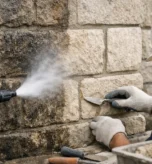
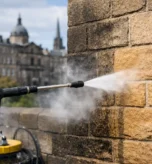
A cracked sandstone sill, blown pointing or a face of stone starting to spall is never just a cosmetic issue on a historic property. With listed building stone repair, the real question is not simply how to make it look better, but how to protect the building fabric without damaging the character that gives it value in the first place. On Edinburgh’s older properties, the wrong repair can stand out visually, trap moisture and accelerate decay where sound workmanship would have stabilised the masonry for years.
Why listed building stone repair needs a specialist approach
Listed buildings are not ordinary repair projects. Their stonework, mortar joints, detailing and weathering patterns form part of the building’s historic significance, which means repairs need to respect both appearance and performance.
That matters especially with sandstone. Much of Edinburgh’s traditional building stock was designed to breathe. Moisture entering the wall through wind-driven rain or natural absorption needs to evaporate back out again. If a repair introduces hard cement mortars, impermeable fillers or poorly matched replacement stone, the wall can no longer behave as intended. Water becomes trapped, adjacent stone starts to break down, and a relatively small defect often turns into a broader repair programme.
A proper repair begins with understanding why the failure has happened. Sometimes the problem is simple age and exposure. In other cases, stone damage is being driven by leaking rainwater goods, previous cement pointing, rusting embedded metal, movement around openings or repeated freeze-thaw cycles. Treating the visible damage without addressing the cause is usually a short-lived fix.
What causes stone to fail on listed buildings?
Most owners first notice change rather than outright failure. Mortar begins to recess. Fine cracks appear around window surrounds. Stone edges soften. A carved detail starts to lose definition. These are early signs that the building needs attention.
On listed and period buildings, common causes include prolonged water exposure, failed joints, inappropriate past repairs and natural weathering over decades. In exposed parts of Edinburgh such as New Town, Marchmont or Morningside, repeated wetting and drying can be particularly hard on sandstone façades. South and west-facing elevations often weather differently from sheltered areas, so repairs must be led by the building itself rather than a one-size-fits-all specification.
Spalling is a frequent issue. This happens when the face of the stone begins to detach or break away, often because moisture is trapped within the stone and forced out through the surface. Cement-based repairs are a regular culprit. They may appear solid at first, but they are often too hard and too dense for older sandstone, pushing stress and moisture into the surrounding masonry.
Assessing repair options before work begins
The best listed building stone repair work is measured, not rushed. A careful inspection should look at the extent of decay, the underlying cause, the condition of surrounding stone and whether localised repair will perform properly over time.
Not every damaged stone needs full replacement. In many cases, a masonry repair can preserve more of the original fabric, which is usually the preferred outcome where the remaining stone is sound. Small losses, fractures and weathered arrises may be repaired with compatible mineral-based methods where appropriate. More advanced decay, structural failure or deep spalling may require piecing-in or full stone replacement.
This is where judgement matters. Over-repairing a listed building removes historic material unnecessarily. Under-repairing leaves unstable masonry in place and stores up greater cost for later. A skilled stonemason will weigh fabric retention, durability, visual consistency and the building’s exposure before recommending the right course of action.
Listed building stone repair methods that respect the building
Lime pointing and mortar repairs
Mortar joints do more than tidy the appearance of masonry. In traditional stonework, they help manage moisture movement and accommodate slight building movement. Where joints have failed, careful raking out and repointing in an appropriate lime mortar is often a key part of the repair strategy.
Lime mortar is generally better suited to historic sandstone than strong cement mixes because it is more flexible and vapour permeable. It allows the wall to breathe and helps sacrificially take weathering that would otherwise affect the stone itself. The exact mortar mix, finish and joint profile should be matched to the building rather than chosen for convenience.
Stone indents and piecing-in
Where only part of a stone has failed, piecing-in can be an excellent solution. This involves cutting out the defective section and inserting a new piece of matching stone, shaped and fixed with care so that it performs as part of the original unit.
Done properly, this preserves more historic fabric than full replacement and avoids unnecessary disturbance to surrounding masonry. It also allows repairs to be visually discreet, particularly on mouldings, cills, steps and ashlar façades where consistency matters.
Full stone replacement
Sometimes replacement is unavoidable. If the stone has lost structural integrity, decay runs too deep, or there is no reliable substrate left for repair, replacing the unit is the most responsible option.
The crucial point is compatibility. The new stone should be selected for similar geological properties, porosity, strength and appearance, not simply surface colour. Poor matching is obvious on a listed building, but the bigger issue is performance. A replacement stone that behaves differently from the surrounding masonry can create future stress and uneven weathering.
Crack stitching and stabilisation
Cracks in stonework do not always mean active structural movement, but they should never be dismissed. Some are local failures around openings or lintels. Others point to deeper issues such as movement, corroded metal or failed support within the wall.
Repair may involve stitching, local rebuilding or targeted replacement, depending on the cause and location. The aim is to stabilise the masonry with as little intervention as possible while keeping the repair sympathetic to the original construction.
Matching stone and workmanship matters as much as the repair itself
A listed building will always show whether a repair has been carried out with care. Tooling, joint finish, stone selection and the way new work sits against weathered masonry all influence the final result.
This is one reason specialist stonemasonry is so important. Good listed building stone repair should not look harsh, flat or obviously modern. At the same time, it should not rely on superficial colouring or cosmetic patching to disguise poor work. The best repairs settle naturally into the building because the materials and methods are right from the start.
Owners are often understandably focused on appearance, especially on prominent front elevations. That is sensible, but visual matching should never come at the expense of technical compatibility. A neat-looking cement repair that traps moisture is not a successful repair. On heritage masonry, appearance and performance have to go together.
Consent, planning and practical considerations
With listed buildings, repair work may need listed building consent depending on the extent and nature of the works. Routine like-for-like repair is often treated differently from alteration, but assumptions can be costly. If stone replacement, changes in detailing or broader façade works are involved, it is wise to clarify requirements before work begins.
Practical access can also shape the programme. Chimneys, parapets, high tenement elevations and ornate ashlar details may require scaffolding and a phased approach. This affects cost, but it also affects what can be inspected properly. A repair proposal based only on a ground-level view is rarely enough for a building with significant high-level decay.
Choosing the right contractor for a listed stone building
For owners and managers of period property, the biggest risk is often appointing a general contractor who treats historic masonry like modern brickwork. Listed stone buildings need specialist knowledge of sandstone behaviour, lime mortars, decay diagnosis and conservation-led repair methods.
Ask how the cause of stone failure will be identified, not just how the surface will be patched. Ask what mortar will be used and why. Ask how replacement stone will be matched. Ask whether the goal is to preserve sound original fabric wherever possible. These are basic questions, but the answers reveal a great deal about whether the work will be durable and appropriate.
A dependable repair contractor should be able to explain the trade-offs clearly. There are cases where a lower-cost local repair is reasonable, and others where a more extensive intervention is the only sound option. What matters is honest guidance, careful workmanship and a clear understanding of how traditional stone buildings perform.
For sandstone properties in Edinburgh, that local experience is particularly valuable. The city’s masonry is distinctive, its weather exposure is demanding, and many buildings have already been affected by decades of unsuitable repairs. A heritage-led approach is not an added extra here. It is the standard the building requires.
If your stonework is showing signs of erosion, cracking, failed pointing or surface loss, early action usually gives you more repair options and better value. Careful intervention at the right time protects the building’s character, prevents wider decay and helps ensure the next repair is measured in decades rather than seasons. If you need specialist guidance, A & M Sandstone Restoration Edinburgh can assess the masonry and advise on a repair approach that is faithful to the building and built to last.